An HVAC system stands for Heating, Ventilation, and Air Conditioning. It keeps us comfortable by controlling temperature, humidity, and air quality. Here, we’ll explain HVAC systems, covering their parts and how they work together
Let’s break it down:
1. Heating System: This part of the HVAC system keeps things toasty by warming the air. This is done using furnaces, heat pumps, or boilers.
2. Cooling System: When things get too hot, the cooling system kicks in to remove heat from the air and bring down the temperature.
3. Air Handling Unit (AHU): The AHU is the heart of the HVAC system. It regulates and circulates the air. The system includes the blower, filters, and dampers.
4. Ductwork: Ducts are like the highways that carry the heated or cooled air throughout the building.
5. Thermostat: This is the boss of the HVAC system. It lets you set the temperature and control how everything works.
How It All Comes Together:
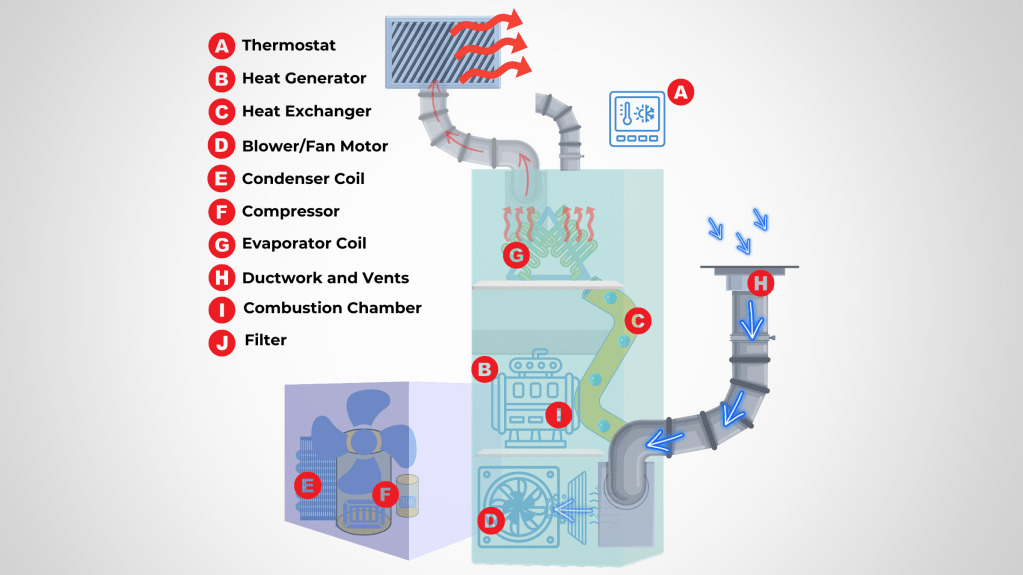
The HVAC system diagram shows how all these parts work together in harmony. These parts include the air handler, evaporator coils, heat exchanger, outdoor unit, and temperature control.
The heating and cooling systems team up to ensure the indoor temperature is just right. The air handling unit makes sure the conditioned air reaches every corner of the building. The ductwork helps the air flow smoothly throughout the space.
Why Understanding HVAC System Diagrams Matters:
Understanding HVAC systems is essential for ensuring heating, ventilation, and air conditioning (HVAC) systems work efficiently. Knowing your way around HVAC equipment is a significant advantage. It lets HVAC technicians diagnose and fix issues like pros.
Building and property owners, managers, and contractors can use this knowledge to make smart choices. They can decide when to maintain or recycle and replace old HVAC equipment. For help, they can reach out to the experts at ACRE and turn their old HVAC equipment into revenue.
Understanding the different types of HVAC systems is important. These include AC units, forced air systems, ductless systems, split systems, and heat pump systems. Knowing about these systems can help you improve performance and lead to more energy-efficient heating and cooling. Read more about the different HVAC types here.
 HVAC Info and Recycling Blog